Tresorit represents the premium end of the zero-knowledge encrypted cloud storage market, positioning
itself as the highest-security cloud storage option available for businesses and individuals who consider
data privacy and protection non-negotiable requirements rather than optional features. While several cloud
storage services offer encrypted storage as a feature alongside other capabilities, Tresorit builds its
entire platform around zero-knowledge encryption as the foundational architecture, ensuring that every
aspect of the service is designed with security as the primary consideration rather than an afterthought
layered onto a storage platform originally designed for convenience. This security-first design philosophy
permeates everything from the user interface to the sharing mechanisms to the administrative tools,
creating a cohesive platform where privacy protection is architecturally guaranteed rather than
policy dependent.
Founded in 2011 by Hungarian entrepreneurs Istvan Lam, Szilveszter Szebeni, and Gyorgy Szilagyi, Tresorit
is now headquartered in Zurich, Switzerland, and fully owned by Swiss Post, the Swiss national postal
service. This Swiss ownership and jurisdiction provide the same privacy framework advantages as other
Swiss-based services, with the additional credibility of state postal service ownership providing
institutional backing and long-term operational stability that pure startup cloud storage companies
cannot match. Swiss Post’s ownership since 2021 has strengthened Tresorit’s position as a
trustworthy provider for organizations requiring maximum data protection assurance. Switzerland’s
Federal Act on Data Protection provides stringent privacy protections that exceed those of many other
jurisdictions, and Switzerland’s position outside the European Union while maintaining adequacy
recognition under GDPR creates a favorable privacy environment that benefits Tresorit’s users
regardless of their own geographic location.
Zero-Knowledge Encryption Architecture
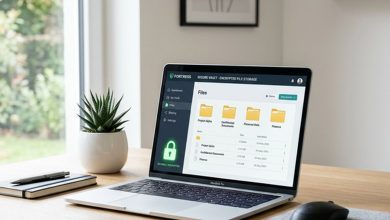
Tresorit’s end-to-end encryption ensures that files are encrypted on the user’s device before leaving
that device, transmitted in encrypted form, and stored on Tresorit’s servers in a state that Tresorit
cannot decrypt. The encryption uses AES-256 for symmetric file encryption and RSA-4096 for asymmetric
key exchange, providing encryption strength that meets the most demanding security requirements. The
encryption keys are derived from the user’s password through PBKDF2 key derivation and never leave the
user’s devices in unencrypted form.
The zero-knowledge architecture extends beyond file content encryption to include file names, folder
structure, metadata, and sharing information. Tresorit’s servers process only encrypted data and encrypted
metadata, with no capability to observe what files are stored, how they are organized, what they are named,
or who they are shared with. This comprehensive encryption scope distinguishes Tresorit from services that
encrypt file contents but leave organizational metadata visible to the server.
Cryptographic integrity verification ensures that files cannot be tampered with during storage or
transmission without detection. Each file is authenticated using HMAC verification, and any unauthorized
modification — whether by a malicious actor, a compromised server, or a software error — is detected and
reported to the user. This integrity protection goes beyond encryption, which protects confidentiality,
to also protect data authenticity and ensure that retrieved files are identical to the versions that
were originally uploaded.
Business and Enterprise Features
Tresorit’s business-focused feature set reflects its targeting of organizations with stringent security
and compliance requirements. Administrative controls include centralized user management with role-based
access, policy enforcement for password strength and two-factor authentication, device management and
approval, IP restriction for geographic access control, and detailed activity logging for compliance
auditing. These administrative capabilities enable organizations to deploy Tresorit with the governance
controls that regulated industries require.
Data Residency controls allow organizations to specify the geographic region where their encrypted data is
stored, with options including European data centers, Swiss data centers, and other regional options.
While the data is encrypted and inaccessible to Tresorit regardless of storage location, data residency
controls address regulatory requirements that mandate specific geographic storage locations for citizen
data, financial records, or other regulated information categories.
Compliance documentation covers major regulatory frameworks including GDPR, HIPAA, CCPA, ITAR, TISAX
for automotive industry requirements, and various financial industry regulations. The zero-knowledge
architecture inherently simplifies many compliance arguments because the encrypted data is technically
inaccessible to the service provider, addressing data protection requirements at the architectural level
rather than through procedural controls that depend on staff behavior and organizational discipline.
eSign integration provides encrypted document signing capability directly within the Tresorit platform,
eliminating the need to send sensitive documents to external signing services where they may be stored in
less secure environments. The integrated signing workflow keeps documents within Tresorit’s encrypted
infrastructure throughout the preparation, signing, and storage lifecycle.
Sharing and Collaboration
Tresorit’s encrypted sharing enables distributing files and folders to recipients while maintaining
end-to-end encryption throughout the sharing process. Shared links can be configured with password
protection, expiration dates, download limits, and watermarking that applies the recipient’s identifying
information to previewed and downloaded content. The watermarking capability provides accountability
and traceability for shared sensitive documents, creating a deterrent against unauthorized
redistribution.
Encrypted workspace capability enables shared folders where multiple Tresorit users can access and
contribute to shared content with end-to-end encryption maintained for all participants. The shared
workspace model provides collaborative file access without compromising the zero-knowledge security
model — each participant’s access is authenticated and authorized through the encrypted sharing
infrastructure, and Tresorit’s servers facilitate the sharing without gaining access to the shared
content.
Email encryption integration with Microsoft Outlook allows sending encrypted emails and attachments
directly from the Outlook interface, replacing standard email transmission with Tresorit’s encrypted
delivery mechanism. Recipients receive a link to access the encrypted content through Tresorit’s
secure interface rather than receiving unencrypted attachments through standard email transport. This
integration addresses the common security gap where organizations protect stored files with encryption
but transmit the same files unencrypted through email.
Desktop and Mobile Experience
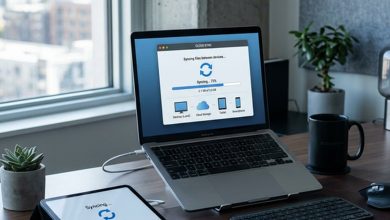
Desktop applications for Windows and macOS provide file synchronization between local storage and
Tresorit’s encrypted cloud, operating through the familiar sync-folder model. Files placed in the
sync folder are automatically encrypted and uploaded, and files added from other devices are
downloaded and decrypted for local access. The desktop applications handle encryption and decryption
transparently, providing a user experience similar to non-encrypted cloud storage services despite
the additional cryptographic processing. Smart Sync-style functionality allows files to appear in
the local file system without downloading their content, downloading on demand when opened.
The Windows integration includes context menu options for sharing files and folders directly from File
Explorer, creating encrypted share links without opening the Tresorit application. On macOS, Finder
integration provides similar right-click sharing capability and sync status indicators that show
whether files are synchronized, pending upload, or available only online. Both desktop clients provide
system tray or menu bar indicators showing synchronization status, recent activity, and quick access
to shared workspaces.
Mobile applications for iOS and Android provide encrypted file access, camera upload, and file sharing
from smartphones and tablets. The mobile applications maintain the zero-knowledge encryption architecture
on mobile devices, processing encryption and decryption locally on the phone or tablet. Offline access
to selected files is supported by downloading and decrypting them for local device storage. The mobile
camera upload feature automatically encrypts and uploads new photographs to Tresorit, providing
encrypted backup of mobile photography that is particularly relevant for professionals who photograph
sensitive documents, patient records, construction site documentation, or other confidential visual
content that requires encryption protection.
Target Use Cases and Industry Applications
Tresorit’s combination of zero-knowledge encryption, compliance certifications, and business features
makes it particularly well-suited for specific professional scenarios where data protection requirements
are mandated rather than optional. Legal professionals handling privileged client communications,
confidential case materials, and discovery documents benefit from encryption that protects
attorney-client privilege even if the storage infrastructure is compromised. Healthcare organizations
handling protected health information under HIPAA regulations can use Tresorit’s encrypted storage to
meet the technical safeguard requirements without relying on provider access controls alone.
Financial services firms handling client financial data, trading strategies, and regulatory filings find
Tresorit’s encryption and compliance documentation directly applicable to their data protection
obligations. Research and development teams protecting intellectual property, trade secrets, and
pre-publication scientific data use Tresorit’s encryption to ensure that even a server breach cannot
expose proprietary information. Government contractors handling controlled unclassified information
under ITAR or similar frameworks can leverage Tresorit’s data residency and encryption capabilities
to meet contractual data protection requirements.
For individual privacy-conscious users, Tresorit provides peace of mind that personal documents —
identity documents, financial records, medical records, legal documents, and other sensitive personal
files — are stored with the strongest available encryption and under favorable privacy jurisdiction.
The premium pricing is justified when the potential consequences of unauthorized data access are
significant enough to warrant the additional cost of maximum-security storage.
Pricing Considerations
Tresorit’s pricing reflects its premium positioning and is notably higher than mainstream cloud storage
services and most other encrypted alternatives. Individual plans provide moderate storage allocations
compared to the terabyte-scale storage available from mainstream services at similar or lower price
points. The Personal plan includes enough storage for document-centric use cases but may be insufficient
for users with large media libraries. Business and enterprise plans carry per-user pricing that
represents a significant investment, justified by the comprehensive security architecture and compliance
capabilities for organizations where data protection requirements warrant the additional cost.
Tresorit does not offer a permanent free tier for ongoing use, though free trial periods allow
evaluating the service before committing to paid plans. The absence of a free tier reflects the
premium positioning and the cost of maintaining the security infrastructure that supports the
zero-knowledge architecture. For organizations comparing Tresorit’s cost against potential data
breach costs, regulatory fines, or the expense of building equivalent in-house encryption
infrastructure, the premium pricing often represents a compelling value calculation.
Strengths and Honest Limitations
Tresorit provides the most comprehensive zero-knowledge encryption implementation among mainstream
cloud storage services, with security that extends to file content, names, metadata, and sharing.
Swiss jurisdiction and Swiss Post ownership provide exceptional trust signals that few competitors
can match. Business and compliance features address enterprise security requirements at the architectural
level rather than through add-on features. Integrated eSign and email encryption extend the security
boundary beyond simple file storage into document workflows and communications.
The platform’s independent security audits and public bug bounty program demonstrate ongoing commitment
to security verification beyond the company’s own internal testing. Tresorit has never experienced a
publicly disclosed security breach, which — while not guaranteeing future immunity — demonstrates
the practical effectiveness of its security architecture and operational practices over its decade-plus
of operations.
Limitations include premium pricing that significantly exceeds mainstream alternatives, moderate
storage allocations at each price tier, the absence of integrated productivity tools for document
creation, and a smaller third-party integration ecosystem compared to major platforms. Synchronization
performance does not match Dropbox’s speed and efficiency for large-scale file operations. The strong
security focus introduces usability trade-offs inherent to zero-knowledge encryption, including the
irrecoverability of forgotten passwords and some limitations on sharing with non-Tresorit users.
When comparing Tresorit against the broader encrypted storage market, the key distinction is between
Tresorit’s premium, full-featured approach and more affordable encrypted alternatives that provide
strong encryption with fewer enterprise features. For comparison with other encrypted and mainstream
options, our Sync.com
review covers a more affordable encrypted alternative, and our cloud
storage comparison provides full market context across all major platforms.
Features and pricing referenced in this article are based on information available at the time of writing
and are subject to change. Please verify current details on the official Tresorit website.
Author Persona

Tools Editor
Professional Tech Editor specializing in mobile applications, security privacy, and digital tools. Dedicated to providing in-depth reviews and guides for users worldwide.